

 Image 1 of 3
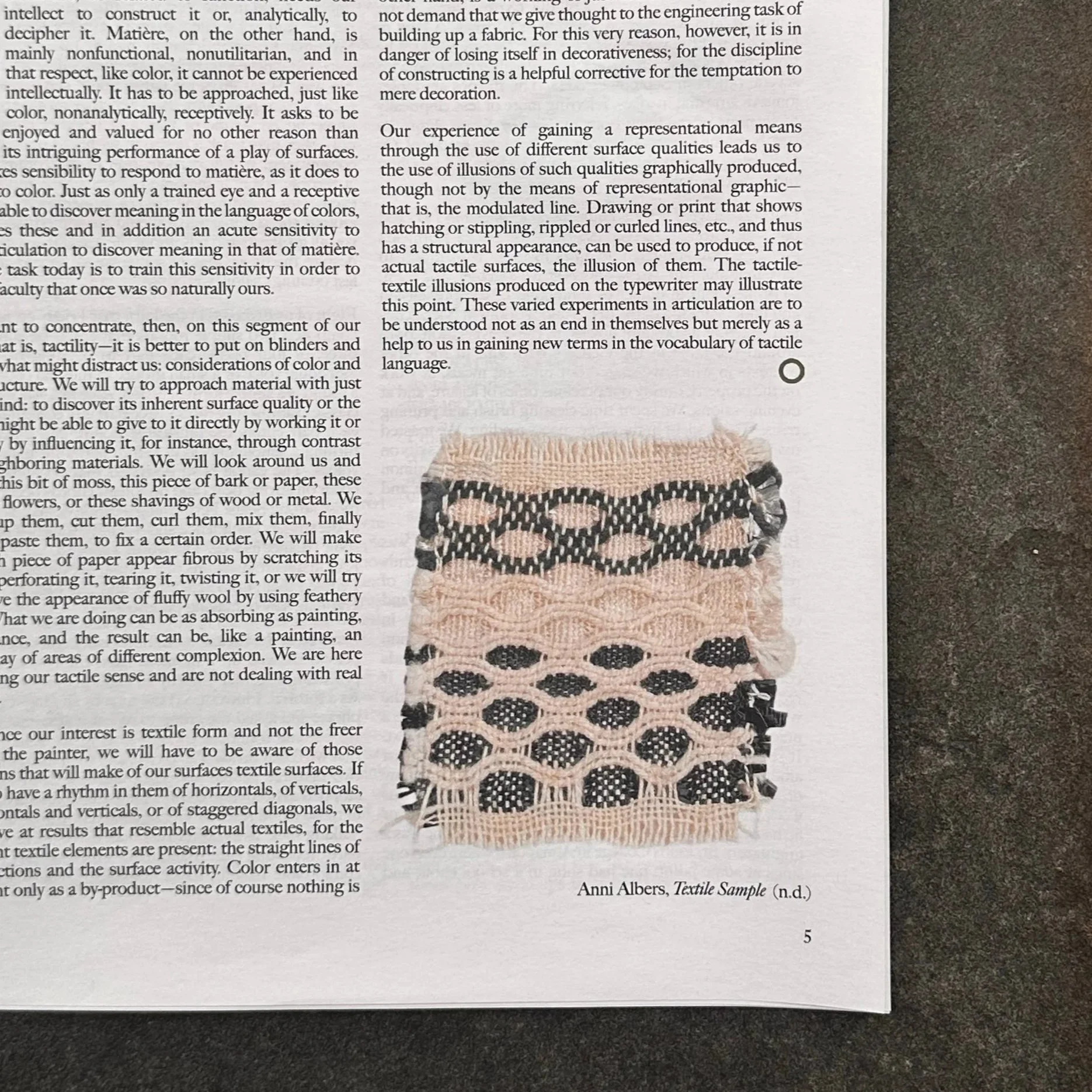 Image 2 of 3
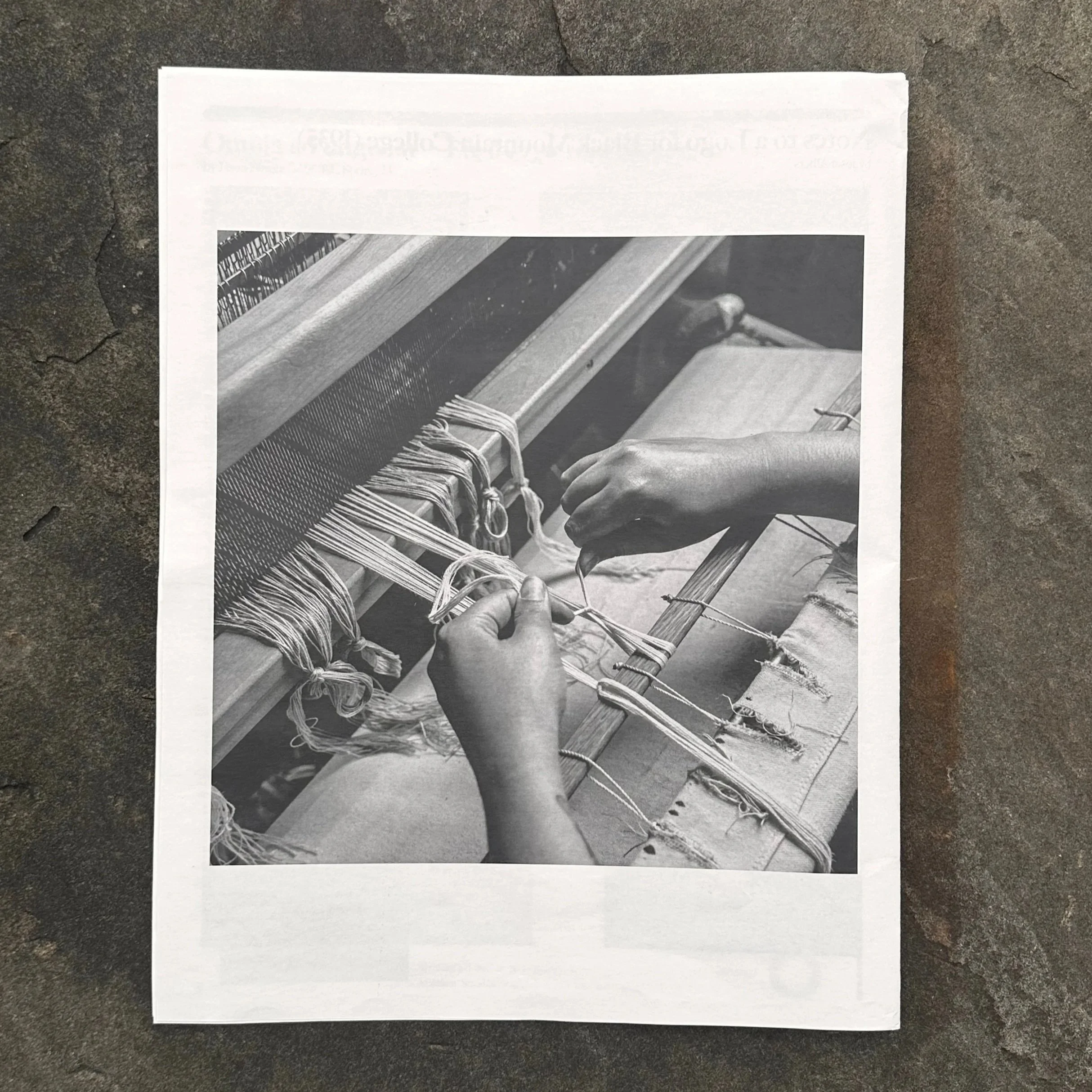 Image 3 of 3
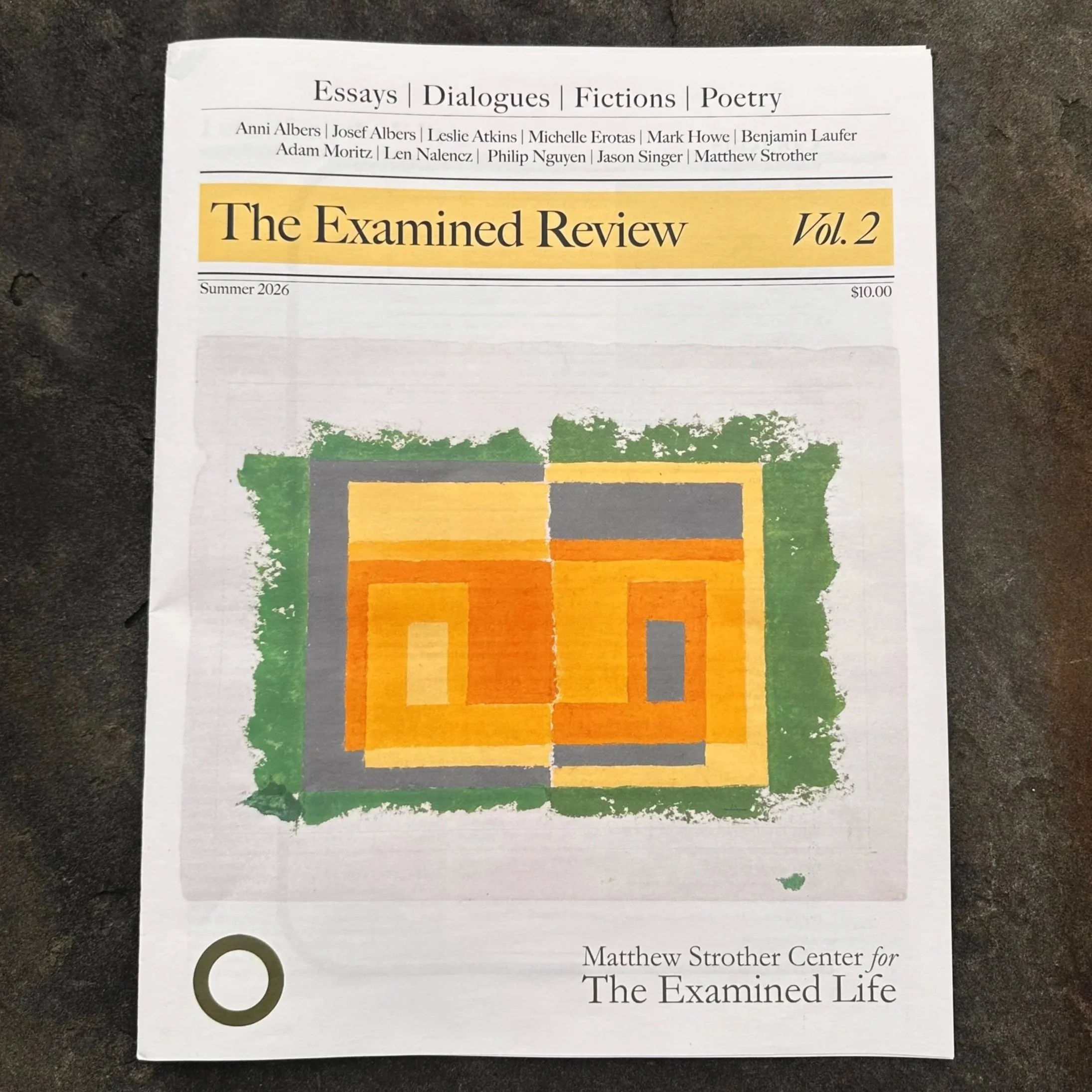
The Examined Review is a print-only publication featuring writing from those in and around the Matthew Strother Center for the Examined Life.
This second installment orbits an expanded sense of learning, where connecting with another individual can be as profound and as generative as parsing the philosophy of Friedrich Nietzsche.
Included in the issue: an essay by Leslie Atkins, physicist and science educator at Boise State University, on the analogous “frustrations” of atoms in a glass and of motherhood; a narrative by retired organist and conductor Mark Howe, reflecting on teaching his fellow MSCEL students choral rounds based on the rhymes in Nietzsche’s The Gay Science; and a fictionalized peek into the ever-changing dynamics of the seminar room by MSCEL Core Faculty Len Nalencz.
Among these are works by Josef and Anni Albers—paintings, weavings, drawings, little-circulated texts—whose legacy of tactile play and rigor set the example for the Center’s interpretation of humanistic learning.
The Examined Review is edited and designed by Adam Moritz, MSCEL Spring ‘24 and Faculty Assistant Spring ‘25.
The Examined Review is a print-only publication featuring writing from those in and around the Matthew Strother Center for the Examined Life.
This second installment orbits an expanded sense of learning, where connecting with another individual can be as profound and as generative as parsing the philosophy of Friedrich Nietzsche.
Included in the issue: an essay by Leslie Atkins, physicist and science educator at Boise State University, on the analogous “frustrations” of atoms in a glass and of motherhood; a narrative by retired organist and conductor Mark Howe, reflecting on teaching his fellow MSCEL students choral rounds based on the rhymes in Nietzsche’s The Gay Science; and a fictionalized peek into the ever-changing dynamics of the seminar room by MSCEL Core Faculty Len Nalencz.
Among these are works by Josef and Anni Albers—paintings, weavings, drawings, little-circulated texts—whose legacy of tactile play and rigor set the example for the Center’s interpretation of humanistic learning.
The Examined Review is edited and designed by Adam Moritz, MSCEL Spring ‘24 and Faculty Assistant Spring ‘25.